Release Stage
Purpose
The Release Stage automates the deployment process to target environments, eliminating manual interventions and ensuring reliable, repeatable releases. This stage:
- Replaces error-prone manual deployments
- Enables rapid and reliable releases
- Supports continuous delivery practices
- Provides consistent environment configuration
- Ensures system stability through automated verification
Architecture Overview
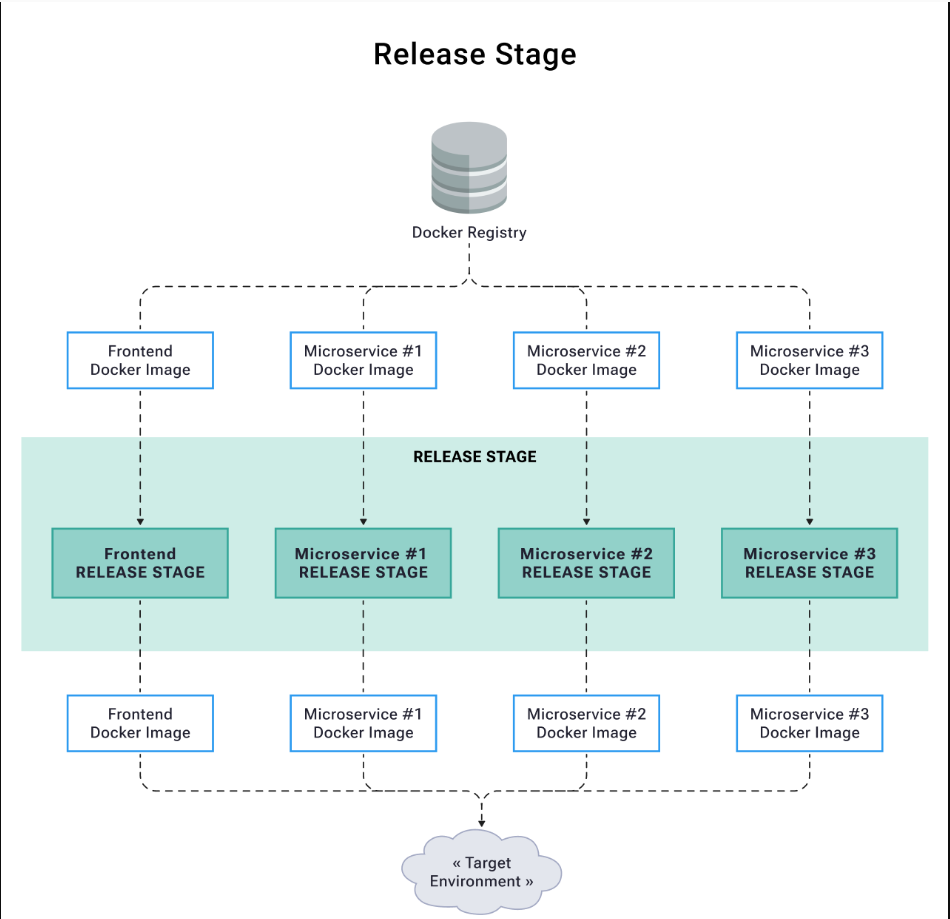
The release stage orchestrates:
- Docker image retrieval from registry
- Environment-specific configuration
- Automated deployment process
- Post-deployment verification
Stage Components
1. Pre-deployment Verification
- Contract compatibility checks via Pact Broker
- Version state verification
- Environment readiness checks
- Infrastructure validation
2. Deployment Process
- Container orchestration with Docker Compose
- Environment-specific configurations
- Health check mechanisms
3. Environment Management
- Infrastructure as Code principles
- Secret management
- Database migrations
- Configuration management
- Volume management for persistence
4. Post-deployment Verification
- Container health checks
- Service connectivity verification
- Database migration validation
- Basic smoke testing
Contract Verification Strategy
Can I Deploy Check
The release stage implements a crucial "Can I Deploy" check before any deployment:
- Verifies if the frontend (consumer) version is compatible with the backend (provider)
- Provides early feedback about contract compatibility
- Prevents deployments that would break service interactions
- Maintains system stability across microservices
Example implementation:
- name: Can I deploy frontend?
  run: |
    pact-broker can-i-deploy \
      --pacticipant digital-kudos-wall-frontend \
      --version ${{ github.event.inputs.frontend_image_tag }} \
      --to-environment uat
Automated Contract Verification
Our implementation includes automated webhook-triggered verification:
-
Consumer Contract Changes
- Frontend pushes new contract to Pact Broker
- Webhook automatically triggers backend verification workflow
- Quick feedback on provider contract satisfaction
- Early detection of breaking changes
-
Provider Changes
- Backend changes trigger verification against all consumer contracts
- Ensures changes don't break existing consumers
- Particularly valuable in multi-consumer scenarios
- Provides confidence in backward compatibility
-
Benefits in Microservices Architecture
- Manages complex service dependencies
- Prevents integration issues before deployment
- Supports independent service evolution
- Enables safe contract changes
Version Management and Recording
After successful deployment:
- Records deployment in Pact Broker
- Updates environment state
- Maintains deployment history
- Enables version tracking across environments
Implementation
- Release Workflow:
digital-kudos-wall/.github/workflows/release-uat.yml
The workflow includes:
- Pre-deployment contract verification
- Environment setup and configuration
- Container deployment and orchestration
- Health checks and verification
- State management and recording
Release Strategy
Version Management
frontend_image_tag:
  description: "Frontend Docker image tag (commit SHA or tag)"
  required: true
  default: "latest"
backend_image_tag:
  description: "Backend Docker image tag (commit SHA or tag)"
  required: true
  default: "latest"
State Management
- Version tracking in state files
- Deployment recording in Pact Broker
- Environment state persistence
Quality Gates
-
Contract Verification
- Consumer contract compatibility
- Provider verification status
- Version compatibility checks
-
Deployment Health
- Container health status
- Service connectivity
- Database migration success
- Basic functionality verification
-
Environment State
- Configuration validation
- Resource availability
- Security compliance
Common Issues and Solutions
-
Database Migration Issues
- Automated migration scripts
- Version control for schemas
- Rollback procedures
-
Container Health
- Health check implementation
- Retry mechanisms
- Logging and monitoring
-
Network Issues
- Service discovery
- Network isolation
- Port mapping
Example Successful Run
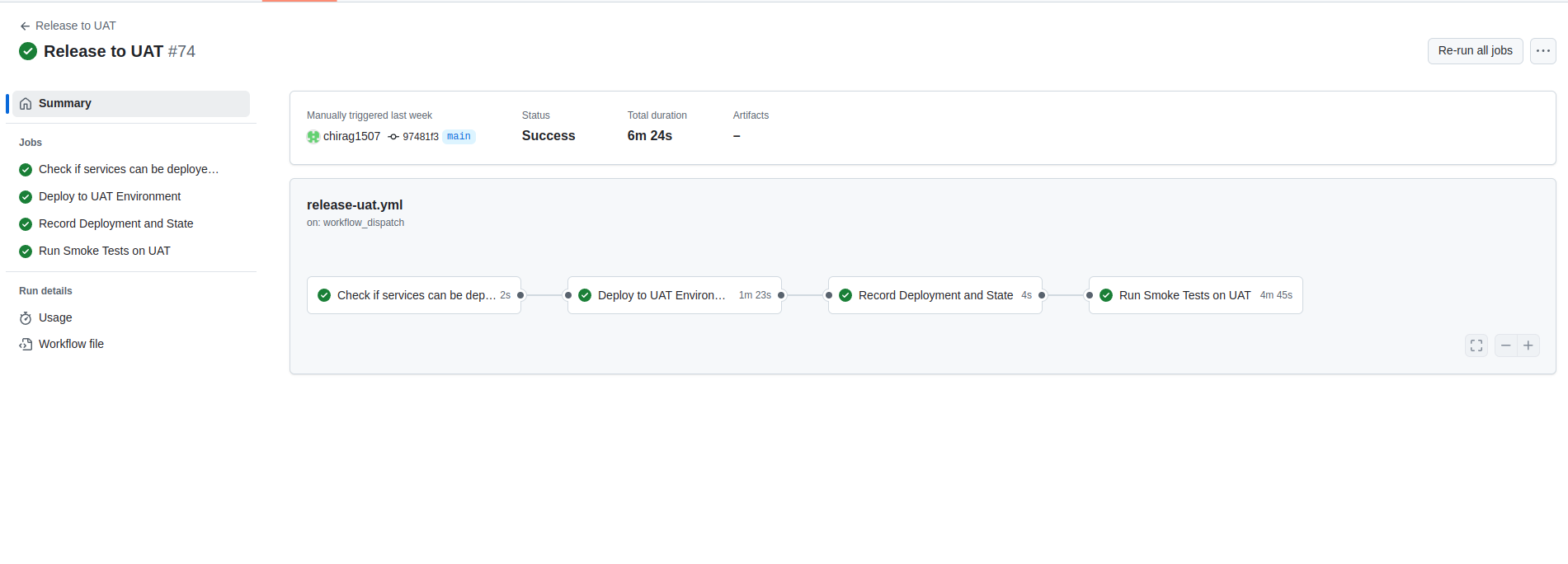
A successful release stage run executes all steps in sequence:
-
Check Services (25s)
- Install Pact CLI
- Debug Pact Broker configuration
- Verify frontend deployment compatibility
- Verify backend deployment compatibility
-
Deploy to UAT (1m 23s)
- Set image URIs and tags
- Deploy to UAT environment via SSH
- Set up database and migrations
- Configure Docker Compose
- Pull latest images
- Start services
- Verify service health
-
Record State (4s)
- Record frontend deployment in Pact Broker
- Record backend deployment in Pact Broker
- Update deployment state files
- Commit version records
-
Smoke Tests (4m 45s)
- Set up test environment
- Install test dependencies
- Run smoke test suite
- Verify deployment success
Total pipeline execution time: ~6m 24s
This efficient execution is achieved through:
- Parallel service deployment where possible
- Optimized smoke test execution
- Efficient state management
- Automated health checks